Screen or Digital Printing? Choosing the Right Print Method for Garments Made in India

Screen or Digital Printing? Choosing the Right Print Method for Garments Made in India
06 November
Manufacturing Expertise

On a mood board, a print may appear as it did intended, but quite a bit different when it's on fabric. Two identical designs manufactured in two different ways will produce different colour depths, edge sharpness, hand feel and may not be consistent when reordered.

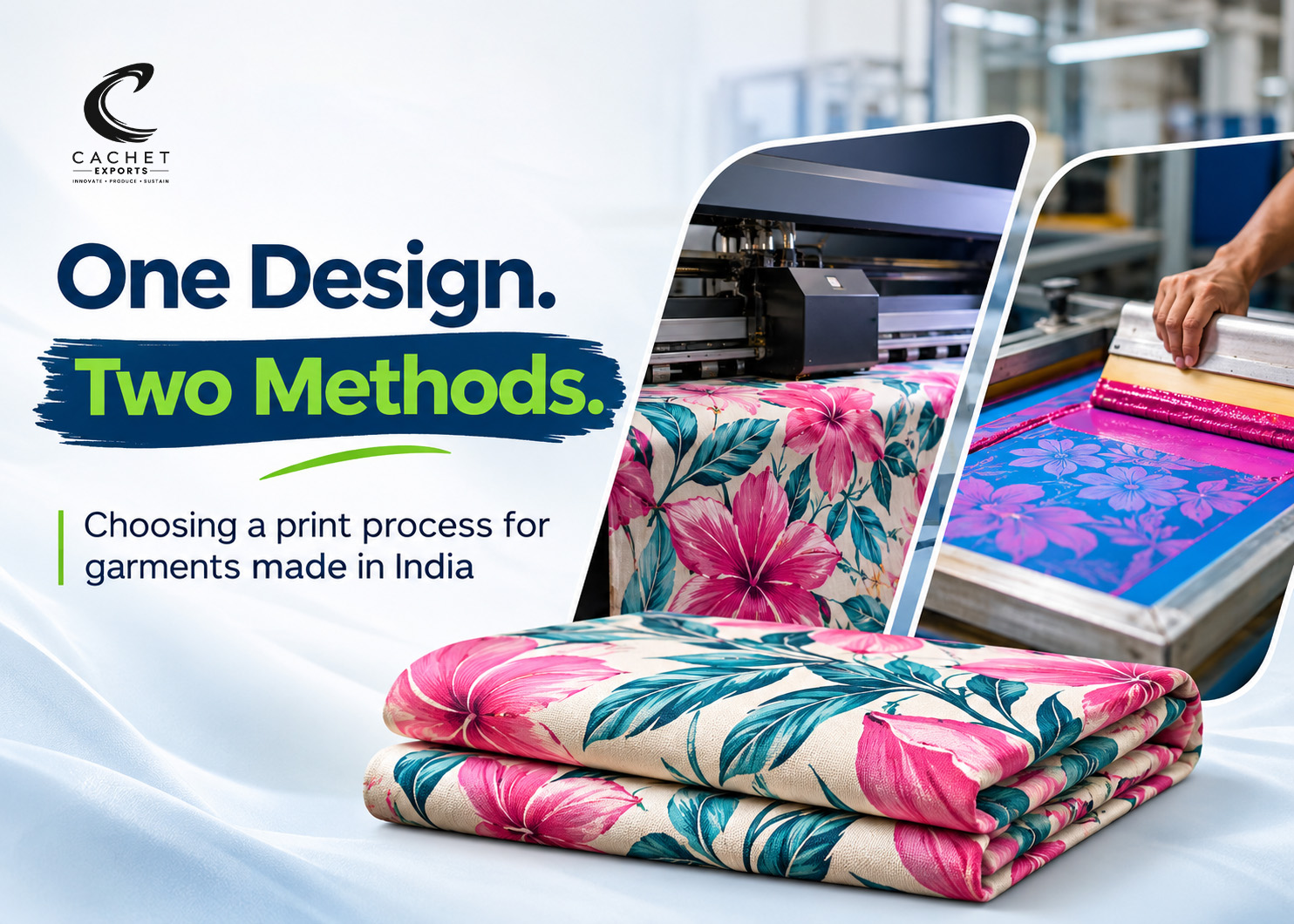
For brands collaborating with printed garment manufacturers in India, deciding between screen printing and digital printing is one of the initial manufacturing choices, and one of the most critical. It has an impact on sampling, costs and fabric selection and the feel of the finished garment.

This guide covers the operation for each method, the situations in which each works best, and questions you can ask your manufacturer before approving a strike-off.

How Screen-Printing Works

Screen Printing is the process of applying ink or dye to fabric using a fine-mesh screen. The design requires its own screen and the colours are printed sequentially.

For textiles, this is done either on flatbed screens or rotary screens, where cylindrical screens print continuously along the length of the fabric.

Where screen printing performs well:

  • Solid, saturated colour. Spot colours will be printed with high opacity and depth, perfect for graphic designs, stripes, florals with clear edges and brand colours that need to be matched to a reference.
  • Larger production runs. Once the screens are made, the cost per metre falls as volume rises.
  • Repeat orders consistency. You can store and use screens, sustaining a recurring print all season.
  • Specialty effects. Discharge, pigment and certain textured finishes are well suited to screen methods.

Where it is limited:

  • A screen, set-up and cost is added each time a new colour is added.
  • It is hard to accurately reproduce photographic images, fine gradients and very high colour counts.
  • Frequent design changes and short runs are less economical because the screen must be set up all over again each time.

How Digital Printing Works

Digital textile printing is a process that involves direct-to-fabric printing from a digital file using an industrial inkjet printer. No screens so set up is not affected by the number of colours used in a design.

The ink type is matched to the fibre:

  • Reactive inks for cotton, viscose, modal and silk
  • Acid inks for silk, wool and nylon
  • Pigment inks for a wide range of natural and blended fabrics
  • Disperse or sublimation inks for polyester

Where digital printing performs well:

  • Complex artwork. Photographic detail, watercolour effects, fine gradients and unlimited colours.
  • Sampling and development. Designs can be adjusted and reprinted quickly, which is useful in early collection development.
  • Smaller runs and multiple colourways. No screen costs means short runs and design variations are more practical.
  • Placement and engineered prints. Prints can be positioned precisely to a garment pattern piece.
  • Lower water use. Digital printing generally uses less water than conventional screen printing, which supports a brand's environmental reporting.

Where it is limited:

  • At high volumes, the cost per metre is usually higher than screen printing.
  • It may sometimes be more difficult to achieve very bright or opaque spot colours on dark ground.
  • Careful file management, calibration and approval is required for colour consistency across production batches.

Screen vs Digital: A Side-by-Side Comparison

Factor

Screen Printing

Digital Printing

Design type

Graphic, spot colours, defined edges

Photographic, gradients, high colour count

Number of colours

Each colour adds a screen

No effect on set-up

Order size

More economical at larger runs

More economical at smaller runs

Sampling flexibility

Changes require new screens

Changes made in the file

Colour character

Deep, opaque, saturated

Detailed, soft, tonal

Hand feel

Varies with ink; pigment can feel heavier

Generally soft, ink sits within the fibre

Repeat orders

Stored screens support consistency

Relies on file and colour calibration

Water use

Generally higher

Generally lower

Both methods have their advantages and disadvantages. The right choice will depend on the design, the type of fabric and the commercial strategy for the collection.

Five Questions That Decide the Print Method

A professional printed garment exporter in India will always ask you about these points before they suggest a solution. Answers are available in advance increases sampling speed.

  1. How complex is the artwork?
    Count the colours and look for any photo elements or gradients. A four-colour graphic that is leaning towards the screen. A painterly floral with dozens of tones leans towards digital.
  2. What is the fabric?
    Count the colours and look for any photo elements or gradients. A four-colour graphic that is leaning towards the screen.
  3. How many pieces, and will the style repeat?
    A capsule run or test collection often suits digital. A core style expected to repeat across several seasons may justify the investment in screens.

  4. How should the garment feel?
    The quality of inks and processes is determined by the type of fibre. Each fiber reacts differently: Silk, cotton, modal, viscose, wool. Just because a print looks great on cotton poplin doesn't mean it will look great on silk crepe.
  5. What testing will your brand require?
    The majority of brands will list the colour fastness requirements for washing, rubbing and light exposure and many brands will have a limited list of substances. Outline these requirements prior to sampling to verify that the manufacturer has the capability to support the type of inks, processes and test reports.

Combining Print with Hand Embroidery

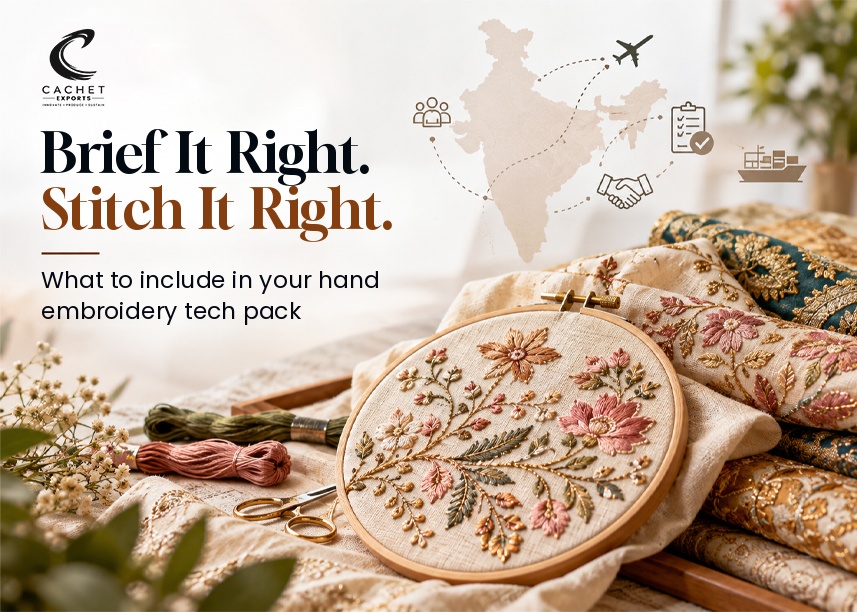
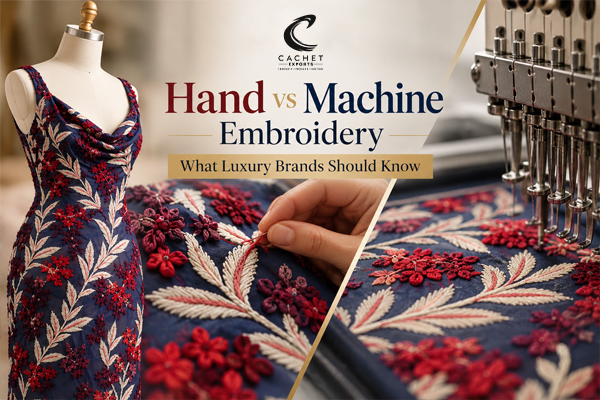
Print is used as the basic material for some of the most characteristic clothing with hand embroidery being the final touch. The floral can be lifted from a printed design and the same can be done with a digital design; zardozi or beadwork can be used to highlight the printed designs.

This combination will require design planning. The printing has to be done properly and the fabric needs to be able to be embroidered with the frame and also be able to go through the printing.

Working with a manufacturer that handles both printing and hand embroidery in-house reduces the risk of misalignment between separate suppliers.

What to Ask Before You Approve a Strike-Off

A strike-off is a sample of the print on the actual production fabric. It is the most important approval point in printed garment manufacturing. Before you sign off, check:

  • Colour accuracy against your approved reference, viewed under agreed lighting conditions
  • Registration — whether colours and outlines line up correctly (critical for screen printing)
  • Detail and sharpness at actual size, not only in a photo
  • Hand feel and drape after washing, if the garment will be washed before sale
  • Colour fastness results against your brand's specification
  • Placement on the pattern piece for engineered or placement prints

Ask your supplier to keep an approved strike-off on file. It becomes the reference for bulk production and future reorders.

Why Brands Source Printed Garments from India

India has a rich heritage in textile printing along with newer and advanced screen and digital printing technology. This is a combination of craft-based design sensibility and export production for overseas brands.

The strongest printed garment manufacturers in India combine three things:

  • Technical range — multiple print methods under one roof
  • Fibre knowledge — the ability to advise on how each fabric will take colour
  • Compliance discipline — documented social and production standards that support a brand's due diligence

For a broader look at evaluating suppliers, read our guide on how to source printed garments from India.

How Cachet Exports Approaches Print

Cachet Exports is an SA-8000 certified Star Export House and is one of the garment garment exporters in India for star printed garments for fashion brands across the globe. From artwork to the finished garment, our team works closely with brands to determine which print technique is best for each design, fabric and order plan.

Our printed fabric and garment range covers screen and digital printing on natural and blended fabrics, with GOTS-compatible production options for brands with sustainability requirements. Our SA-8000 certification gives buyers verified assurance on labour standards — read more on ours sustainability page.

If you are developing a printed collection and want to compare methods on your own fabric, request a sample and share your artwork, fabric preference and target quantity.

Request a sample.

FAQs

  1. Is screen printing or digital printing better for luxury garments?
    None of these are superior in all instances. Screen suits bold, solid colour, and multi-tonal, detailed artwork is used for digital suits.
  2. Which print method is better for small orders?
    Digital printing is typically better for smaller print runs, as it doesn't require any screens.
  3. Can digital printing be used on silk?
    Yes. Acid or reactive inks are used to print on silk.
  4. Does digital printing use less water than screen printing?
    Yes, in general, as many brands have thought about it for their less impactful collections.
  5. What is a strike-off?
    A sample of the print on the actual production fabric, approved before bulk production begins.
  6. Can print and hand embroidery be combined on one garment?
    Yes. Print work is made first and then the embroidery is applied to match the print.

7. What should I send a printed garment manufacturer to get started?
Your artwork file, fabric preference, colour references, target quantity and any testing requirements. You can share these directly with the Cachet Exports team to begin sampling.