Copyright © 2026 Cachet Export All rights reserved.
Powered by AGTS

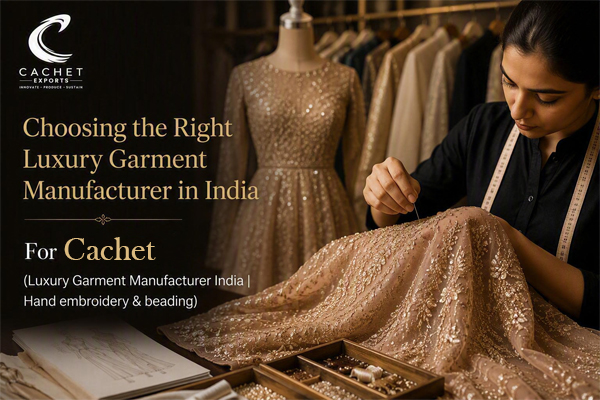
International fashion brands have always depended on techniques, textiles, and even hand craftsmanship from India that is hard to find elsewhere. However, there is a lot of variation in the quality, compliance and reliability of this market. Finding the right overseas supplier is the hardest part for a sourcing manager or brand founder when considering overseas suppliers.
This guide sets out the criteria that matter most when selecting a luxury garment manufacturer in India, with combination of skills, legacy of hand craft technique, large and organised export infrastructure and the manufacturer who has evolved hand craft technique to satisfy international quality and compliance standards.
What makes India stand out in luxury garment manufacturing is a combination of skills, legacy of hand craft technique, large and organised export infrastructure and the manufacturer who has evolved hand craft technique to satisfy international quality and compliance standards. A capable luxury garment manufacturer India brands choose to work with typically combines three things — design flexibility, artisan-level finishing, and export-grade production discipline.
That is why many brands looking for hand embroidery manufacturer India often extend their search to complete garment manufacturing, as there is a close relationship between the two and the best embroidery and garment manufacturers will likely provide both in-house.
Certifications are one of the fastest ways to separate serious manufacturers from the rest. Ask directly:
A brand should be cautious of any supplier that cannot clearly explain what a certification covers, or that references certifications without being able to produce documentation on request.
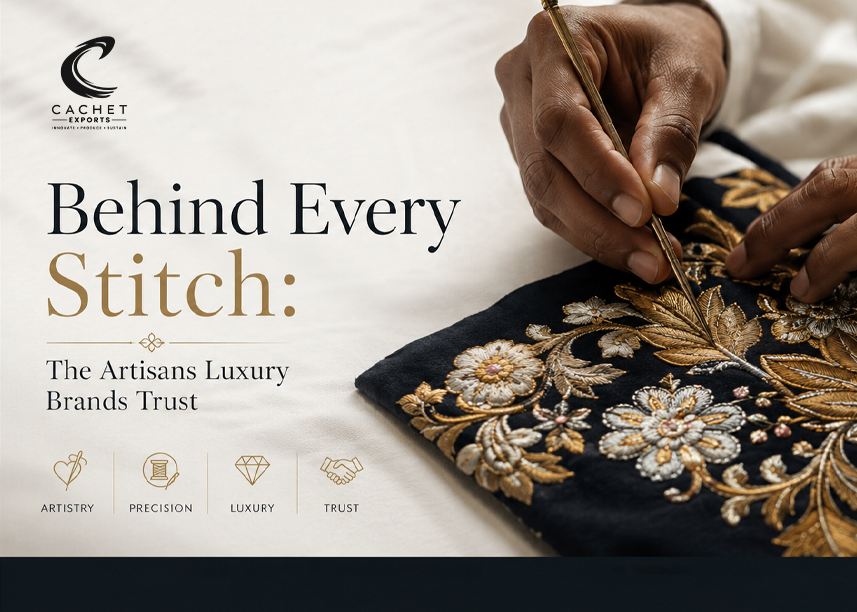
Embroidery is where sourcing decisions go right or wrong most visibly. A hand embroidery manufacturer for luxury brands needs more than machines and a large workforce — it needs artisans trained in specific regional techniques, and a production process that treats embroidery as a craft discipline rather than a bulk finishing step.
When evaluating embroidery capability, brands should ask about:
Researching best embroidered garment manufacturers India, consider this a shortlist qualifier—ask for samples in person, ask specific questions on technique and be wary of any supplier who uses the same terms for all embroidery.
Luxury and premium brands aren't likely to place an order from a standard catalogue. A good manufacturer should be able to use a brand's tech packs, mood boards or reference garments to create production ready specifications. It means not just following instructions without giving suggestions; it involves pattern development, fabric advice, construction feedback etc.
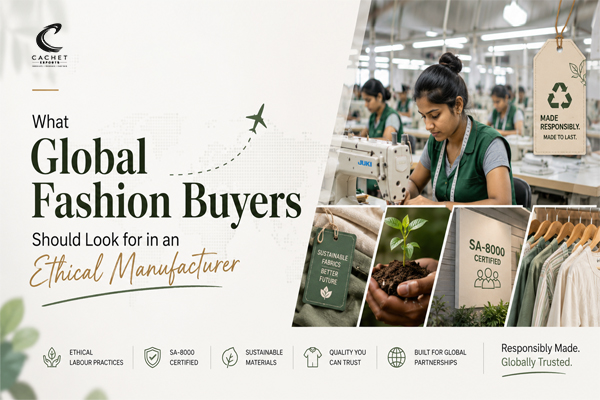
Sourcing teams at larger brands increasingly need to document not just what they are buying, but how it was made. A manufacturer that can speak clearly to its labour practices, certifications, and sustainability posture — without overstating what it holds — makes this documentation process considerably easier. This is also where NGO and social-impact partnerships become relevant: they indicate a manufacturer's commitments extend beyond compliance minimums into active community engagement.
A manufacturer that is difficult to reach before an order is placed will not become easier to reach after. Before committing, brands should assess:
Cachet Exports is a Star Export House and SA-8000 certified garment and hand embroidery manufacturer, working with GOTS-compatible fabric sourcing across garments, hand embroidery, scarves, and printed fabrics. Our embroidery capability spans aari, zardozi, and kantha work, developed by artisans trained in these specific techniques rather than generalist finishing staff.
We work directly with international brands from initial design reference through sampling and bulk production at Cachet Exports, and we are transparent about what our certifications cover and what they do not. If accuracy and traceability matter to your sourcing process — and for most premium and luxury brands, they do — that transparency is worth prioritising over a supplier that simply tells you what you want to hear.
FAQs
1. What makes a manufacturer suitable for luxury garment production?
Strong finishing standards, embroidery capability, and flexibility with detailed, non-catalogue design references.
2. Is hand embroidery from India suitable for high-volume orders?
Yes, but timelines and consistency should be discussed directly with the manufacturer first.
3. What certifications should a brand ask for?
Star Export House status, SA8000 certification and sourcing fabrics that are GOTS certified if the brand cares about sustainability.
4. How is zardozi different from aari embroidery?
Zardozi is work of metallic thread and embellishment while aari is a fine chain-stitch work for detailed ends. Kantha is a type of running stitching; it is a textured stitching.
.jpg)
.jpg)
Copyright © 2026 Cachet Export All rights reserved.
Powered by AGTS