Copyright © 2026 Cachet Export All rights reserved.
Powered by AGTS

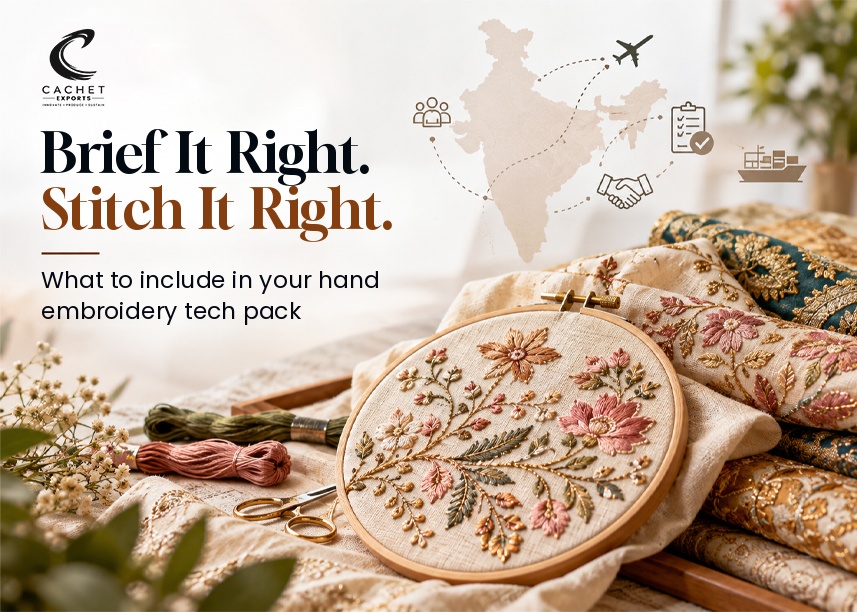
When you're looking to make your first embroidery sample, you need to get the brief to do most of the work. This means include a tech pack that includes a way of approving samples, actual size artwork, placement, technique of each motif, thread and embellishment information, colour reference and fabric information.
Here is something sourcing teams don't always hear: when a sample comes back wrong, the stitching is rarely the problem. Usually, the brief was too loose.
Think about what happens once a design reaches the workshop. Which stitch should be used for the border? How dense should the floral motif be? Silk thread or viscose? Matte or high shine? Every question the brief doesn't answer gets answered by someone at the workshop. A good artisan will make sensible choices, but they are still their choices, not yours. That is how you end up with a third sample round, a delayed launch and a collection that has quietly moved away from the original idea.
For brands working with hand embroidery garment exporters in India, a well-built tech pack is the best protection a design can have. It turns a mood board into instructions people can measure and follow. The workshop can work through it motif by motif, and later, every bulk piece gets checked against it.
Below, we go through what to include, section by section, when you brief a hand embroidery manufacturer in India.
A tech pack, or technical package, is a document sent by a brand to a manufacturer detailing how the garment is to be manufactured. Typically includes sketches, measurements, fabrics, trims, construction and finishing.
Embroidered garments need one more section. A standard garment spec doesn't go into the detail handwork needs, so the embroidery must brief separately and in much more depth.
Work on the design file. Ideal, is a clean vector file, that can be scaled without losing detail. Also send a copy shown or printed at actual size.
Why does size matter so much? A motif shrunk down to fit a slide makes it hard to judge how dense the stitching should be, how big each element is, or how much fine detail can realistically be worked by hand.
Your artwork section should cover:
One of the top reasons for a sample failing, and one of the easiest to avoid, is placement.
Show all the embroidered items on the garment flat sketch. Take measurements from fixed points like the high point shoulder, the centre front or hem, so there is no guesswork.
It also helps to state:
The subject of "Hand embroidery" is quite broad. The various methods yield widely varying results; specify the method of each section of the design. Just describing the overall appearance is not sufficient.
Some of the most common techniques in Indian hand embroidery are listed below:
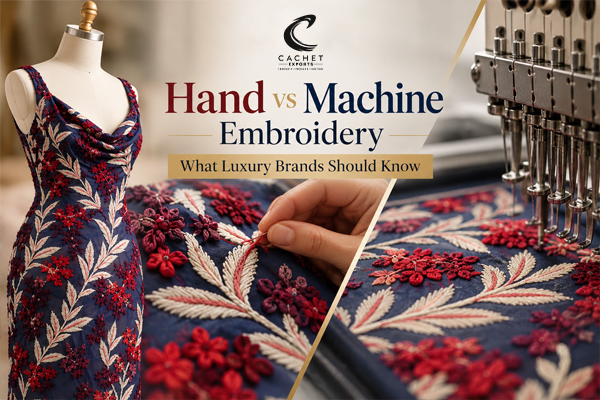
Not sure which technique fits your design? Say so in the brief and ask the manufacturer to suggest options at swatch stage. Our guide on hand vs machine embroidery also explains when each approach makes sense.
Thread changes more than colour. It affects sheen, how well the piece wears and what it costs. For each motif, give:
If you haven't settled on exact materials yet, describe the effect instead. "Matte and fine" or "high-shine and bold" gives the manufacturer enough to source options for you to approve.
Expectations and samples are most likely to diverge with colour. Colours will be different on different screens, so a standard colour that appears correct on your screen could look different when it comes through.
Work with reference cards, which can be checked against by both sides, such as pantone textile codes or swatches. Provide a colour for the fabric, each thread and each embellishment.
Embroidery will react differently depending on the fabric it is embroidered on. For example if a fine fabric is used for a zardozi, it might require stabilising to prevent puckering.
Include:
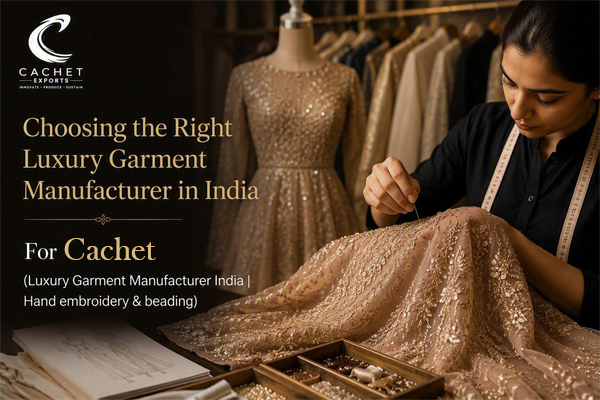
The rest of the garment – attach your normal specification such as flat sketches, size chart, construction notes, trims and labelling. Our guide on luxury garment manufacturing from India covers the wider garment brief in more detail.
Finishing is easy to forget, but it shows. Set out:
Agree how samples will be reviewed before the first one is made. It saves a lot of back and forth later. Your brief should state:
How long sampling takes depends on the design, the technique and the materials. Our article on how long sampling actually takes explains what affects the timeline.
A manufacturer can't give an accurate quote without the commercial side of the brief. Still comparing suppliers? Our guide on what makes a genuine hand embroidery garment exporter in India covers what to check before you share your designs.
Include:
|
Section |
What to include |
|
|
Artwork |
Vector or high-resolution file, actual-size reference |
|
|
Placement |
Measurements from fixed reference points, size grading |
|
|
Technique |
Named technique for each motif |
|
|
Threads and embellishments |
Type, colour, size and finish |
|
|
Colour references |
Pantone codes or physical swatches |
|
|
Base fabric |
Type, composition, weight, backing |
|
|
Garment specification |
Sketches, size chart, construction, trims |
|
|
Finishing and care |
Reverse finish, care instructions, packing |
|
|
Sampling and approval |
Swatch stage, feedback method, approver |
|
|
Commercial details |
Quantity, sizes, target price, delivery window |
|
These come up again:
Cachet Exports is an SA-8000 certified Star Export House specialising in hand embroidered garments, including aari, zardozi and kantha work. We also produce garments, scarves and printed fabrics. Cachet Exports is an SA-8000 certified star export house specializing in hand embroidered garments like aari, zardozi and kantha work. We also manufacture clothes, scarves and print fabrics.
We can work from a full tech pack, a mood board or a reference piece. During development, our team can advise on technique, materials and GOTS-compatible fabric options.
If you don't have a completed brief, please send what you have so far. We will alert you to what is missing before sampling begins.
1. Do I need a complete tech pack before contacting hand embroidery garment exporters in India?
Not all brands begin with sketches and mood boards or a reference garment, and a good manufacturer can help develop the technical detail. However, the more robust your brief, the fewer rounds of samples you will need.
2. What file format should embroidery artwork be in?
Vector files such as AI, EPS or PDF are best, because they scale without losing detail. A high-resolution image can work too, as long as it's clear and shown at actual size.
3. Should I request an embroidery swatch before a garment sample?
For a new design or a technique you haven't used before, yes. A swatch lets you approve the embroidery on its own before you commit to a full garment sample.
4. How do I keep embroidery consistent across a bulk order?
Approve a sample and use it as the reference for production in the form of written documentation. Update tech pack anytime a change is agreed, always the same brief and the same approved sample.
Planning your next embroidered collection? Send our team your tech pack or design references. Request a sample.


Copyright © 2026 Cachet Export All rights reserved.
Powered by AGTS