Copyright © 2026 Cachet Export All rights reserved.
Powered by AGTS

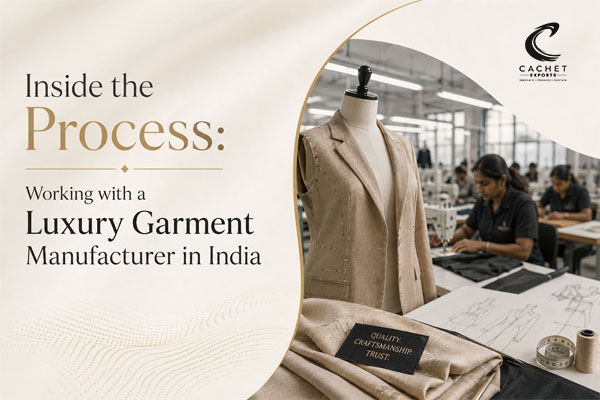
Look for a garment manufacturer in India and the options are so wide, from a small job-work unit to a fully export certified garment manufacturing unit handling an entire collection from start to finish. All of them use the term "luxury clothing manufacturers India" or "luxury garment manufacturer in India," making it difficult to compare them in terms of their labels. The important thing is to know what kind of operation you are looking at, what embroidery and craft ability is like at the top end of this market and what the working relationship is from that point of commitment. This guide walks through all three.
Not every business calling itself a luxury garment manufacturer in India operates the same way. Broadly, they fall into two categories:
Both models have pros and cons – a workshop might be viable for a very small and specialist order. When it comes to sourcing from a "vertically integrated" garment manufacturer in India, however, it usually translates to fewer handoffs and better accountability, with a single point of contact for quality and compliance issues.
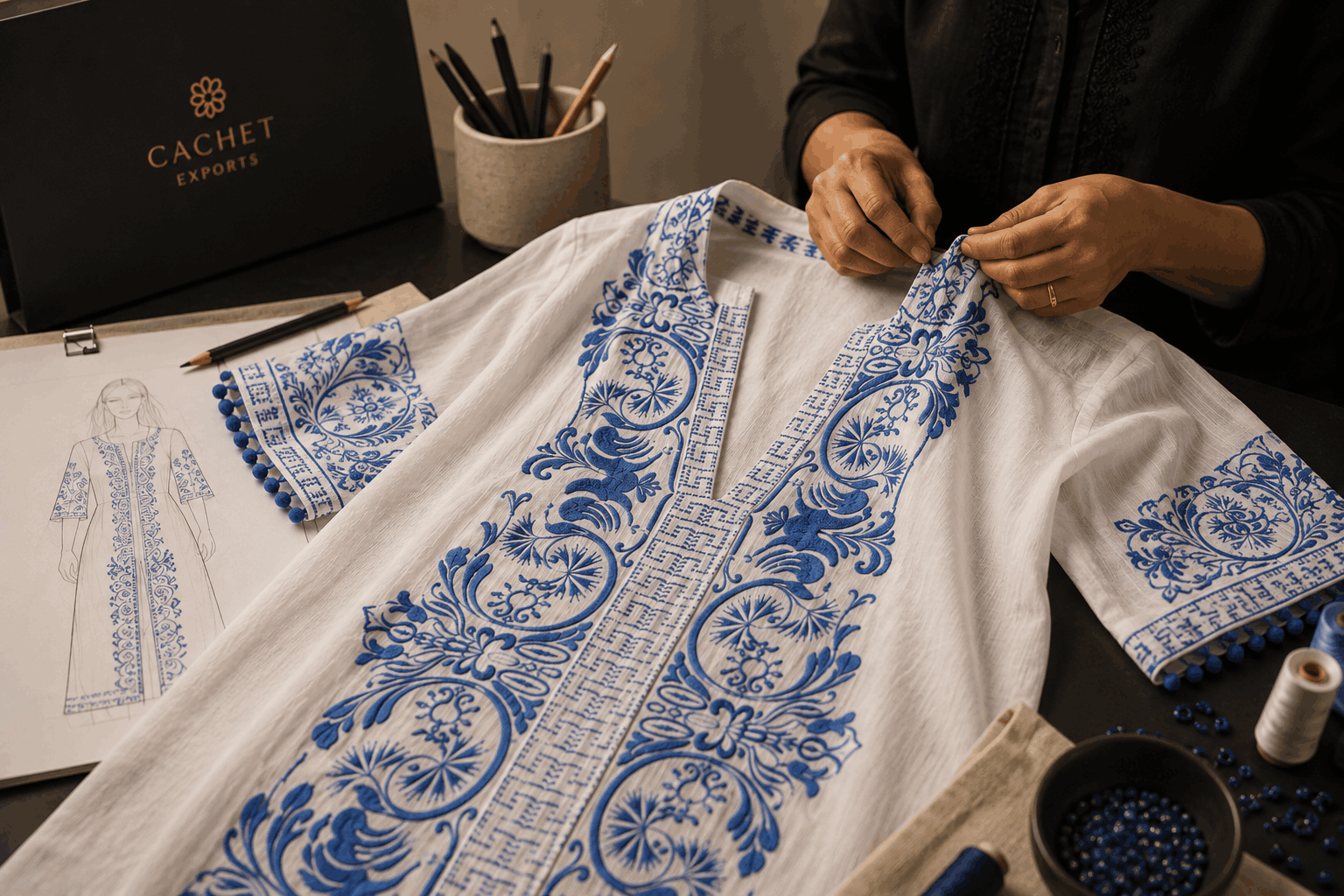
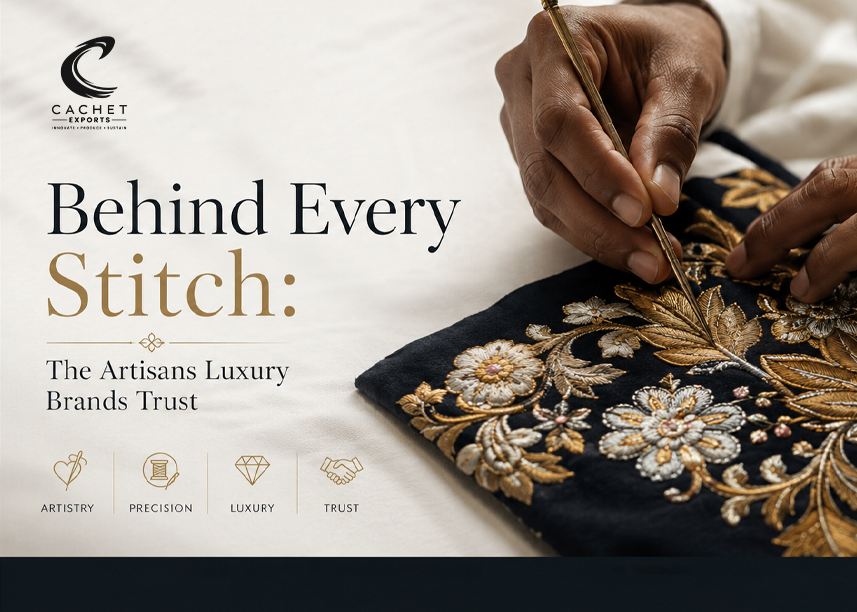
The "luxury" aspect comes into its own in the embroidery section. If you're looking for the best embroidered garment manufacturer in India, then the distinguishing factors are consistent among manufacturers that describe themselves as such.
A manufacturer that can speak to these specifics — and show it, not just describe it — is generally among the best embroidered garment manufacturer options a buyer will find in this market, regardless of how the claim is phrased on their website.
Once you've identified the right type of partner, the relationship itself tends to move through a consistent sequence, regardless of exact timelines:
A manufacturer that can explain to you how they use the specific steps in their own process is a better indicator of how mature they are in their operations.
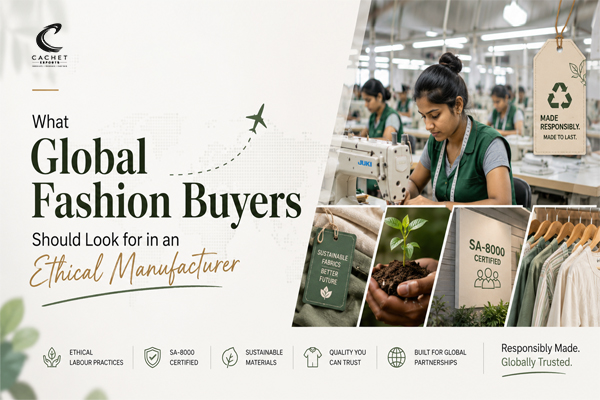
Certifications do not replace the process above, but they do provide an indication of the importance a manufacturer places on accountability. SA-8000 is a certification that means that independent labour and workplace standards were audited. The status of a Star Exporter is given to the exporters based on their performance in export in the past acknowledged by the Government of India. When a manufacturer is using certified fabric inputs where applicable, it is an indication that it is a GOTS manufacturer and therefore a GOTS sourcing signal. None of this alternative to face-to-face discussion of your collection: these are context, not a replacement for due diligence.
A few things catch first-time buyers off guard when working with a garment exporter for the first time - including one positioned among the best embroidered garment manufacturer options in the market:
None of these are reasons to avoid sourcing from India — they're simply part of planning realistically for an international manufacturing relationship.
Among luxury clothing manufacturers in India, Cachet Exports operates as a vertically integrated, SA-8000 certified Star Export House and luxury garment manufacturer in India. Production runs under a single accountable framework — fabric sourcing, cutting, stitching, hand embroidery, and quality control through to export documentation — rather than being spread across a chain of subcontractors with no unified compliance record.
Craft capability spanning Aari, zardozi, and kantha embroidery styles across a variety of luxury garment categories, with GOTS-compatible sourcing for fabric certification needs — that's Cachet Exports. The partnership with Kailash Satyarthi Foundation and Panthera, along with the SA-8000 audit, helps in achieving social compliance.
For a brand evaluating a garment manufacturer in India, that combination — a single accountable entity, verifiable certifications, and demonstrated craft depth — is what distinguishes a vertically integrated exporter from a workshop operating without that structure.
1. What's the difference between a job-work workshop and a vertically integrated manufacturer?
A workshop handles one production stage; a vertically integrated exporter manages fabric through export documentation under one accountable framework.
2. Is "luxury" the same as export-certified?
No — "luxury" is a positioning claim; SA-8000 and Star Export House status are verified credentials worth checking directly.
3. What signals real embroidery capability?
Technique range (aari, zardozi, kantha), precise placement, fabric-thread compatibility, and physical samples over digital mockups.
4. How many sample rounds are typical?
At least one revision round — confirm exact cost and turnaround with the manufacturer upfront.
5. Does GOTS-compatible mean the whole factory is certified?
No — it means certified fabric inputs are used for relevant orders, not that the facility itself holds GOTS certification.
.jpg)
.jpg)
Copyright © 2026 Cachet Export All rights reserved.
Powered by AGTS