Copyright © 2026 Cachet Export All rights reserved.
Powered by AGTS

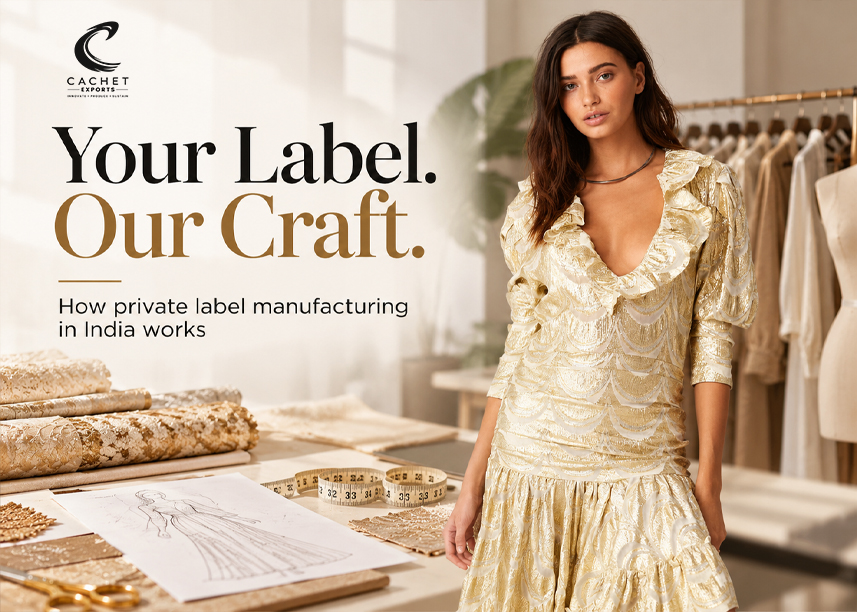
Private label manufacturing involves a fashion brand selling clothing under a different name, but still utilizing the same factory. It is the brand that provides the design and the label, and the manufacturer who produces, samples, develops, and packages according to the brand's specification. If it is done right, nothing is visible of the garment's maker; the only thing visible is the brand name through which it is sold.
India is one of the oldest markets to do this, especially if you're looking for more than just cut and sew. Indian workshops have extensive expertise in embroidery, printed cloths, clothes using natural fibres and scarves, etc. and that is why many brands opt for a private label clothing manufacturer from India in these areas.
Private label is not an order from a catalogue. It will go much smoother if you are aware of how it works, and what you should expect to bring to it. This is a step-by-step guide.
The two terms get mixed up a lot, so it's worth separating them early.
Private label means the product is developed for your brand. You provide the design, or work with the manufacturer to create it, and it's yours. Fabric, fit, trims and finishing are all to your specification.
White label is a pre-made design that the manufacturer has created and you apply your label to it. Much quick and easy, but it might be a similar item being sold by another brand.
When you're looking to buy white label clothing in India, it's important to consider if it is necessary for you. Private label is a better option for premium and luxury brands, where design ownership and exclusivity are important.
|
|
Private label |
White label |
|
Who owns the design |
Your brand |
The manufacturer |
|
Exclusivity |
Exclusive to you |
May be sold to other brands |
|
Customisation |
Fabric, fit, trims, finishing, embellishment |
Mainly labels and packaging |
|
Development time |
Longer, includes sampling |
Shorter |
|
Best for |
Brands building a distinct collection |
Brands testing a category quickly |
Most garment and textile categories can be produced under private label. With an Indian manufacturer, brands commonly develop:
The true strength of Indian private label production is custom embroidered garments. There are very few places with skilled craftsmanship and export quality garment construction in a single entity.
If you are comparing the best embroidered garment manufacturers India has to offer for a private label range, look beyond the portfolio. Ask whether the embroidery is done in-house, which techniques the artisans specialise in, and whether the manufacturer can produce the full garment as well as the handwork. Those answers tell you far more than a polished sample.
The process of going from idea to shipment is typically the same for all manufacturers, although most have their own variations.
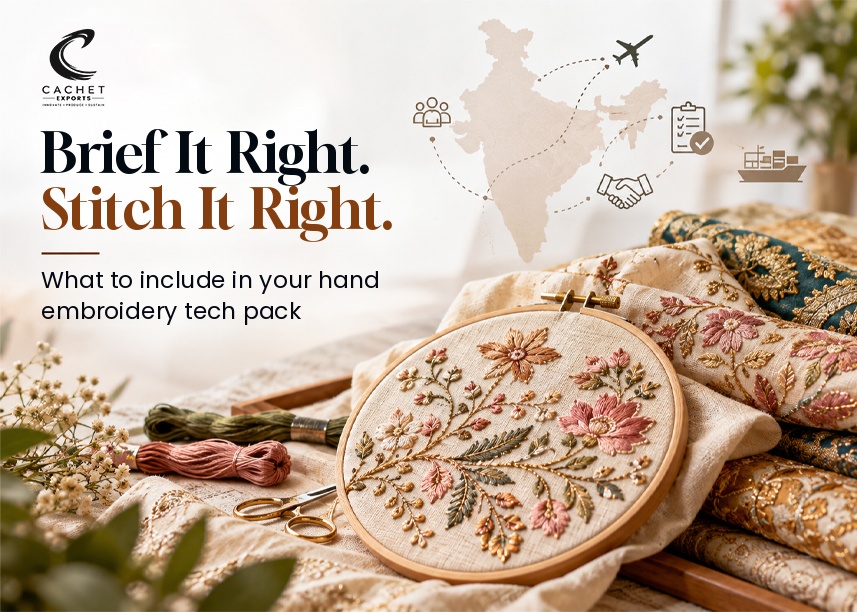
It starts with your brief. The more complete, the quicker everything goes after it. A very good brief will contain a tech pack that consists of sketches, measurements, fabric info, trims, construction notes and, in the case of embellished pieces, artwork and embroidery placement.
Still in the process of building a tech pack? This is normal, particularly for smaller labels. A mood board, reference garments and rough sketches are just as well, and a good manufacturer will be able to add in the technical detail. Our guide on how to brief a hand embroidery manufacturer explains what to include for embroidered designs.
Next comes fabric. You may give a specific fabric or request the manufacturer to recommend similar fabrics for the handle, weight and drape that you desire.
This could also be the time to discuss any sustainability needs. If your brand requires organic or traceable materials, please inquire if there are GOTS compliant fabric options and what documentation will be offered.
At sampling, your design is brought to life as a real garment for the first time. Don't be surprised if it must go through a few revisions. It's not always easy to get fit, proportions, colour and finishing right the first time and that is ok.
For efficiency, provide feedback verbally, preferably with marked-up photos, and keep your tech pack current with each agreed change. The amount of sampling required will vary from garment to garment, depending on the fabric and the amount of handwork to be done. Our article on how long sampling actually takes explains the factors.
Once the sample is right, approve it in writing. The approved sample becomes the "golden sample", the reference that every piece in bulk production is checked against. Keep one yourself and make sure the manufacturer keeps one too.
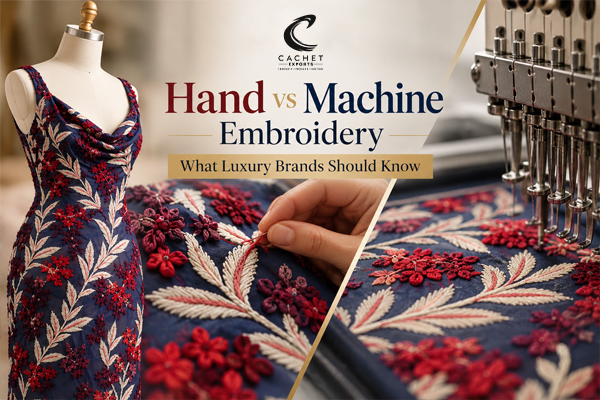
Once approved, production starts: fabric materials being sourced or completed, cut, stitched, embroidered, or printed, and completed. If it's an embellished piece, make sure to ask the manufacturer if they have some way of maintaining uniformity when doing handwork, as no two hand embroidered pieces will be the same.
This is the part that makes it private label. Your brand labels, care labels, swing tags and packaging comes pre-attached, and you can sell the product under your brand.
Come up with a plan with whom to provide what. Some brands send their own woven labels and tags to the manufacturer, while others get labels and tags created locally to their artwork. Either works, if it's settled before production starts.
The garments are final checked against the approved sample before shipping. Then come packing, export documentation and dispatch. This paperwork is taken care of by an expert exporter, who will also negotiate shipping conditions with you ahead of time.
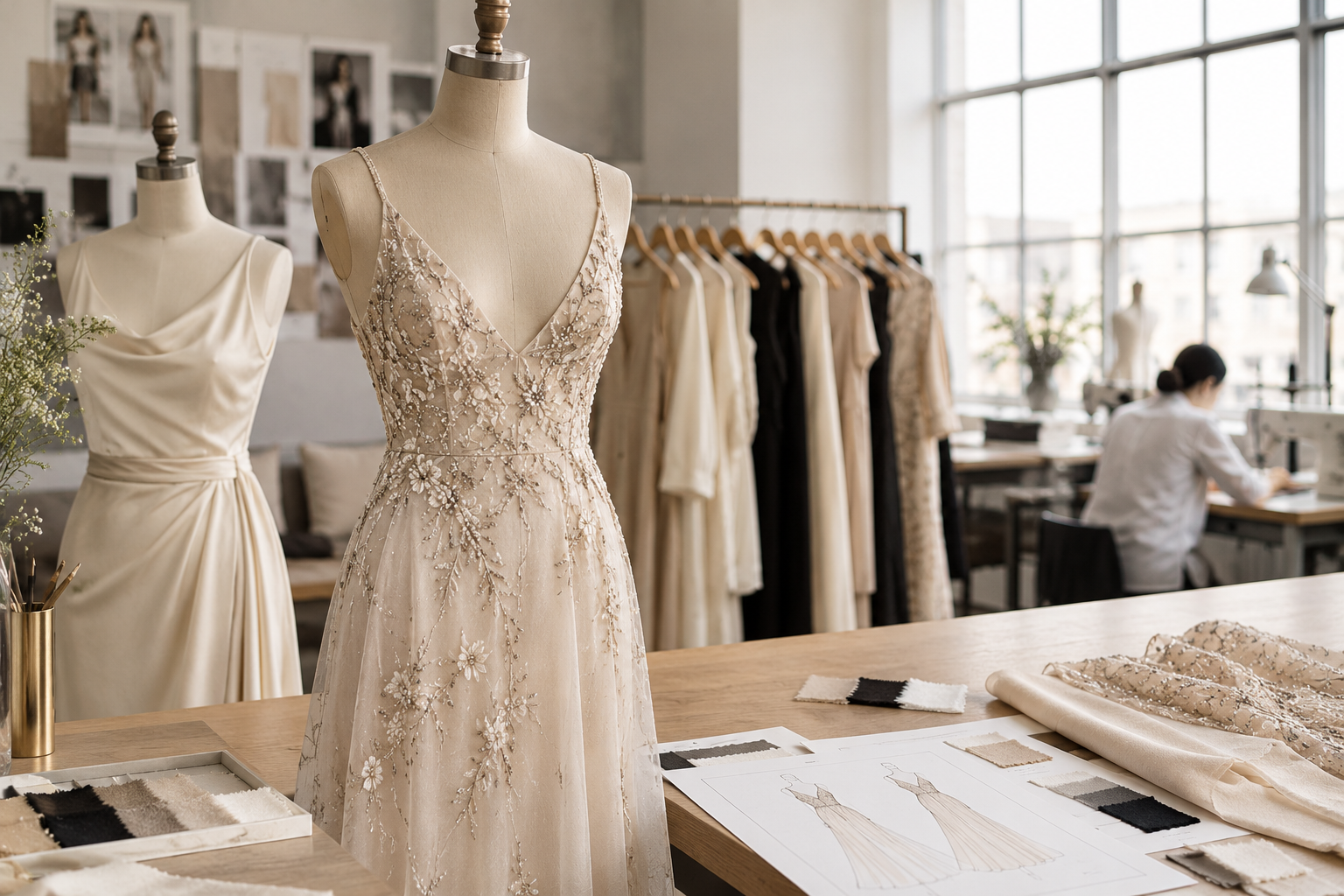
You don't need everything finalised, but having these ready will get you better answers, and faster:
Every private label clothing manufacturer in India sets its own pricing and minimums, so it's best to ask directly. What helps is understanding what drives them:
Brands sometimes worry about sharing original designs with a manufacturer. A few simple steps help:
Transparency on these points is a good sign. A manufacturer who avoids the question is worth thinking twice about.
India's strength isn't just scale. It's the combination of craft and capability:
For brands that want their collection to feel distinct, that mix is hard to find elsewhere. Our guide on luxury garment manufacturing from India looks at this in more detail.
Cachet Exports is an SA-8000 certified Star Export House producing garments, scarves, printed fabrics and hand embroidered pieces for international fashion brands. Our embroidery work includes Aari, zardozi and kantha, and we offer GOTS-compatible fabric options for brands with sustainability commitments.
We can work from a full tech pack or help you develop one from sketches and references. If you are planning a private label collection, whether garments, custom embroidered pieces or private label scarves, we'd be glad to talk it through.
1. What is a private label clothing manufacturer?
A company that creates clothes according to a brand's design and standards and marks and packs the garments as part of that brand. The brand promotes the product, and the manufacturer is in the background.
2. Can I work with a private label clothing manufacturer in India if I'm a small brand?
Often, yes. Minimum quantities vary by manufacturer, fabric and design, so ask early. Being clear about your expected volumes from the start helps the manufacturer tell you what's possible.
3. Do I need my own labels and tags?
You'll need the artwork and specifications. Some brands supply finished labels and tags; others have them produced by the manufacturer to their design. Agree this before production starts.
4. Can private label garments include hand embroidery?
Yes. Custom embroidered garments are one of the main reasons brands choose an Indian manufacturer. Name the technique and placement clearly in your brief and approve an embroidery swatch before the full sample.
5. Is private label available for scarves as well as garments?
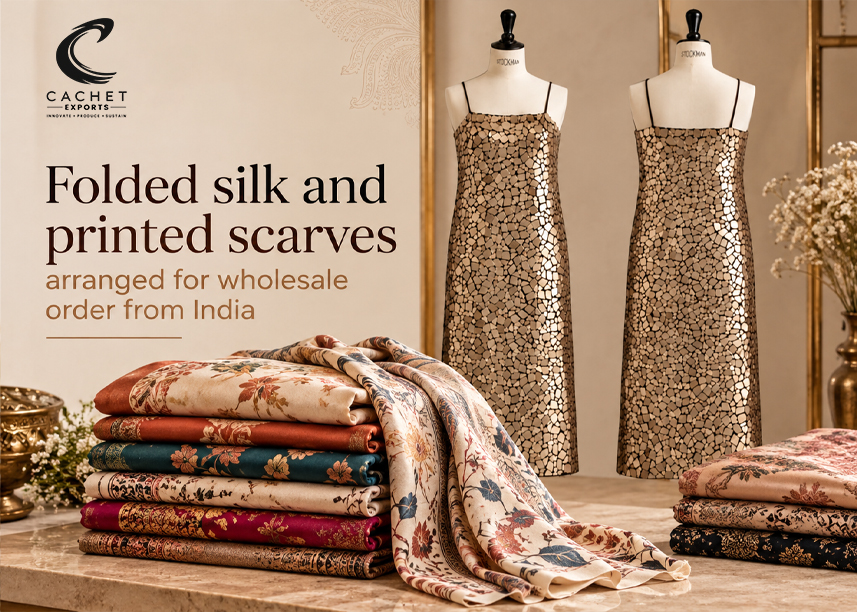
Many Indian manufacturers produce private label scarves alongside garments, with your choice of fabric, size, print and finish.
Copyright © 2026 Cachet Export All rights reserved.
Powered by AGTS