Copyright © 2026 Cachet Export All rights reserved.
Powered by AGTS

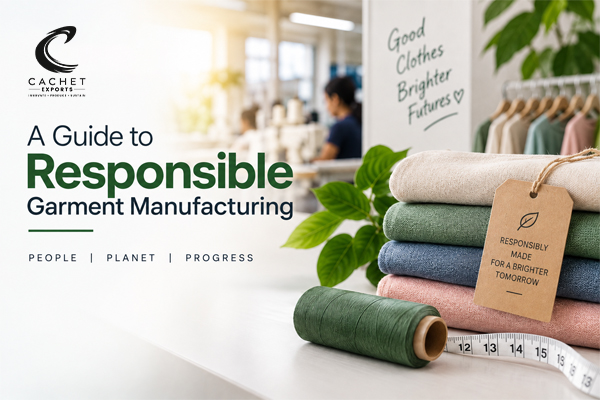
Choosing the sustainable garment manufacturer in India is a critical choice for fashion brands and international buyers. Social responsibility, sourcing materials, quality, environmental impact, certifications and transparency in the supply chain are some of the other items that need to be considered in addition to cost and manufacturing capacity.
India has a strong base of textile and apparel manufacturing which accounts for the world's top classy brands. However, each manufacturer is different in terms of capabilities and standards. By adopting a structured supplier-verification process, buyers have the options of selecting a manufacturing partner that will meet their needs.
An ethical and sustainable garment manufacturer considers both people and production. This can include:
When it comes to purchasing, it's important to look beyond marketing claims for sustainable evidence, documentation, certifications, and actual manufacturing practices.
Request the manufacturer to provide recent copies of certification documents and ensure that the scope, validity, body, and facility included in the certification are up to date.
Social accountability is measured using the SA8000 framework which highlights aspects of workers' rights, health and safety, discrimination, working conditions, wages, freedom of association and management systems.
For those who are seeking an SA-8000 certified garment manufacturer, you can find out more about SA-8000 and how to confirm certification by buyers in ours SA-8000 certification guide.
An ethical garment manufacturer in India should have systems supporting:
These factors are particularly important for brands building responsible and transparent supply chains.
Inquire about the sources of fabrics and fibres and availability of certified or preferred materials. This can be organic cotton, recycled materials, or other certified fabrics depending on your needs. Always ask for relevant documentation in making sustainability claims.
The quality of products is a crucial aspect of sustainable manufacturing. It's important for buyers to be aware of how the manufacturer controls:
A clear quality-control process helps ensure that approved designs and specifications are maintained during bulk production.
Inquire about in-house or outsourcing of the production processes including cutting, stitching, embroidery, printing, washing, and finishing.
Knowledge of the production chain enables buyers to evaluate the transparency of garments manufacturing and determine where garments are actually being produced.
Ask manufacturers about practices relevant to their production, including:
Buyers should ask for details on the practices of the claim, instead of using the word 'sustainable'.
For global fashion brands, evaluate the manufacturer's experience with:
A manufacturer with experience in international sourcing can better understand the documentation and production requirements of overseas buyers.
Certifications provide useful evidence, but different certifications address different aspects of manufacturing.
For example, SA8000 focuses on social performance and decent work, while GOTS focuses on requirements for certified organic textiles and their processing and supply chain. Therefore, supplier evaluation should combine:
Certifications + factory capabilities + material sourcing + worker welfare + quality control + environmental practices + transparency.
Before placing an order, ask:
When brands are looking for a sustainable garment manufacturer in India, a good supplier should not only have manufacturing expertise but also be responsible to produce the garments, have quality assurance, transparency, and compliance.
Buyers wanting to find an ethical garment manufacturer in Kolkata will have to assess the individual garment manufacturer's certifications, facilities, production capacity, sourcing of materials, working conditions, documentation, etc.
Cachet is an SA-8000 certified garment manufacturer, a Government of India recognised Star Export House. Based on a Sustainability Approach that includes Social Responsibility and Responsible Material Practice.
When it comes to picking the best sustainable garment manufacturer in India, cost and quantity are not the only things to consider. All aspects of evaluation, certification, ethical labour practices, material sourcing, quality control, environmental responsibility, transparency, and export experience should be taken into consideration as part of the evaluation.
Fashion brands can choose a more responsible and transparent supplier by following certain indicators when choosing a manufacturer, which contributes to a more transparent supply chain.
1. What should I look for in a sustainable garment manufacturer in India?
Consider certifications, worker welfare, sourcing materials, environmental management, the quality control process, transparency of production, and international experience with the buyer.
2. What is an ethical garment manufacturer?
An ethical garment manufacturer maintains responsible labour practices, safe working conditions, upholds workers' rights and transparent production processes.
3. Why is SA8000 important for garment manufacturers?
SA8000 provides guidelines for decent working conditions and social accountability, and this is applicable to the buyers' assessment of labour and workplace practices.
4. Is SA8000 the same as GOTS?
No. SA8000 is primarily focused on social accountability and decent work; GOTS is focused on certified organic textile products, processing and supply chain.


Copyright © 2026 Cachet Export All rights reserved.
Powered by AGTS