Copyright © 2026 Cachet Export All rights reserved.
Powered by AGTS

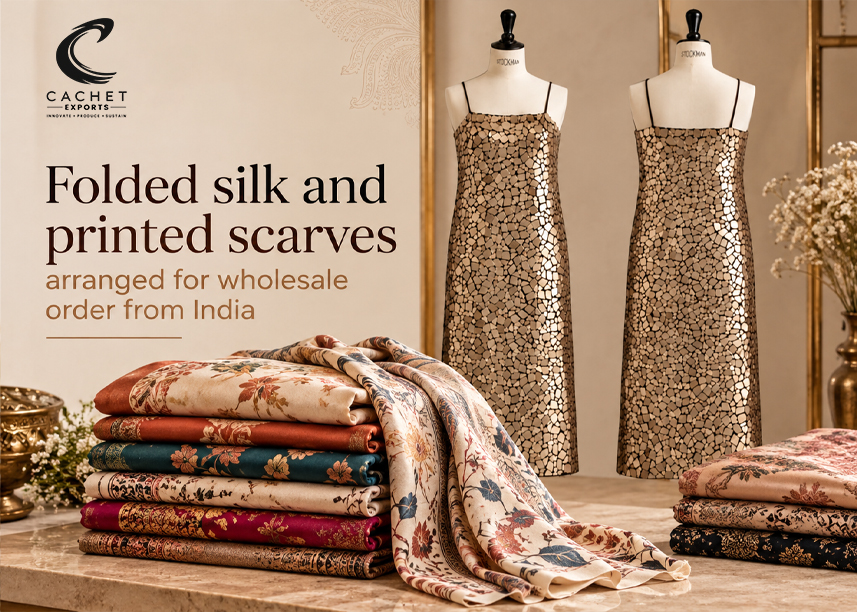
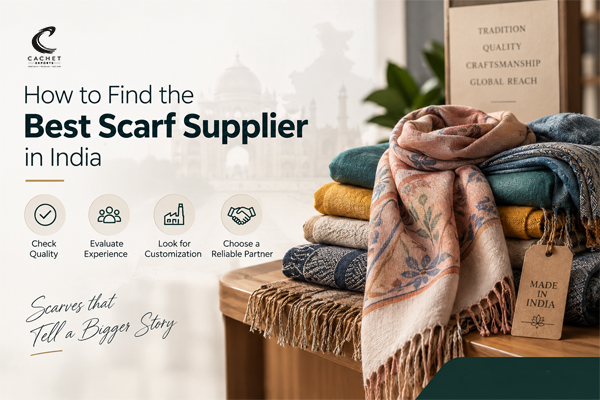
The samples look right, the conversations have been easy, and you're ready to place your first order for wholesale scarves from India. This is exactly the moment to slow down for a day and put the terms in writing.
Many issues with wholesale scarf orders have nothing to do with the quality of the product. They're from items that you don't agree upon clearly at the beginning: a scarf that comes some centimetres short, a colour that is close but not exactly what you were expecting, a shipment that costs more than you thought. All these can be avoided with no difficulty. They should be settled prior to production, not during.
This guide covers the key terms to discuss with an Indian scarf supplier before placing an order, from fabric selection and sampling to pricing, quality checks, packaging, payment, and shipping. If you're still evaluating suppliers, read our guide on how to find the right scarf supplier in India before finalising your choice.
To explain further, first know what type of order you are ordering.
Stock designs are scarves the supplier already makes. You choose from existing designs and colourways, sometimes adding your own labels. It's quicker and often simpler on minimums, but the same designs may be sold to other buyers.
Custom designs are developed for your brand alone. You provide an artwork or create it in consultation with a Custom scarf manufacturer in India and select the print, size and finish of the fabric. We'll have to wait for sampling, but it's yours and not anyone else's.
Many brands mix the two: a few stock pieces to round out a range, and custom designs for their signature styles. If you are going to sell it as you own brand, you are creating your own range of private label scarves, and the following terms are even more important.
Quick note on language: A general wholesale scarves supplier can only resell their stock, a manufacturer can create and produce to your specification. If you're buying from India, ask which one you are buying.
Fabric decides how a scarf looks, drapes, feels and is priced. Agree on:
In the case of silk scarves, you should find a silk scarf manufacturer in India that has experience with the specific quality of silk that you require, as they can vary greatly in handling and finishing. Request a fabric sample to keep. If questioned about later, it becomes your reference.
The same material can be used for two different-looking scarves if the size and finishing are different. Put these in writing:
Hand-rolled hems deserve a specific mention. They're a mark of quality on silk scarves, and buyers often assume them when the supplier hasn't quoted for them.
The technique is as important as the painting, with printed scarves. With a custom printed scarves manufacturer, agree on:
Expectations most commonly wander when it comes to colour. Provide Pantone textile swatches or physical swatches instead of relying on screen colours and approve the strike-off before anything else is put into production. Our guide to printed fabric suppliers in India explains print methods in more depth.
Agree how sampling works before it begins:
Keep one approved sample yourself, and make sure the supplier keeps one too. Our article on how long sampling actually takes covers what affects the timeline.
Some suppliers have minimum order quantities that are different, so please ask specifically—don't assume. An understanding of the motivation for their behaviors is helpful:
Let them know that your quantities are small, if they are, say so early. A good supplier may be able to offer solutions, such as reducing the number of colourways, or a common base fabric for multiple designs.
The price per scarf isn't much of an indicator until you understand what you're buying. Get quotes for a definite Incoterm. The most common are:
Also see if the price also covers labels, packaging and testing, as well as the validity of the quote.
Scarves are often sold folded, boxed or hung, so packaging affects how they arrive in store. Agree on:
For private label scarves, this is where your brand identity comes in. Our guide on private label clothing manufacturing in India explains how the wider private label process works.
Decide in advance how quality will be checked:
Writing this down avoids difficult conversations later.
Payment terms vary, especially in a new relationship. Common arrangements include a deposit before production with the balance before or after shipment, or payment by letter of credit. Agree on:
Finally, agree how and when the scarves will reach you:
Scarves are light, so air freight is often practical for smaller orders, while sea freight usually makes more sense for larger ones.
|
Term |
What to confirm |
|
Order type |
Stock or custom designs |
|
Fabric |
Type, composition, finish, swatch kept |
|
Size and finish |
Dimensions, tolerance, weight, edge finish |
|
Design and print |
Print method, colourways, strike-off approved |
|
Sampling |
Cost, revisions, approved sample kept |
|
Quantity |
Minimums per design, colour and fabric |
|
Pricing |
Incoterm, inclusions, quote validity |
|
Packaging and labelling |
Folding, packing, labels, tags, cartons |
|
Quality checks |
Inspection stage, tolerances, defect handling |
|
Payment |
Structure, currency, bank charges |
|
Delivery |
Schedule, freight mode, documents |
Cachet Exports is an SA-8000 certified Star Export House and custom scarf manufacturer in India, producing silk, wool, cashmere and printed scarves for international fashion brands. We offer GOTS-compatible fabric options for brands with sustainability commitments, and we can develop scarves from your own artwork or work with you on new designs, including private label scarves under your brand.
If you're planning to order wholesale scarves from India, we're happy to talk through fabrics, sampling and the terms that matter for your range.
A wholesale supplier can be offering existing designs. A custom scarf manufacturer creates scarves, which are designed to your own specifications, fabric and finish. Most Indian manufacturers have both.
Sometimes. This will be influenced by the fabric, print process and amount of colour variations. Communicate early your estimated amounts and request the manufacturer to make suitable suggestions.
Yes. A strike-off displays your artwork and colours on the actual fabric and it's much simpler to make changes at this point than after bulk production.
Copyright © 2026 Cachet Export All rights reserved.
Powered by AGTS