Copyright © 2026 Cachet Export All rights reserved.
Powered by AGTS

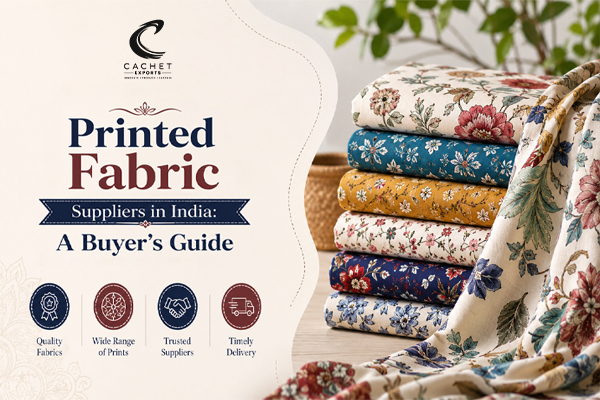
India has emerged as one of the world's most reliable sources to get printed textiles, whether it is a small batch designer run or a large order for international retail chains. For international companies making their first contact the market can be quite daunting, however, and thousands of mills and agents tout their skills and services. This guide explains how a reliable printed fabric supplier in India stands out from the crowd and what you need to look for before entering into a contract.
India's textile sector boasts of a large production capacity and flexibility of design, which is difficult to find anywhere else. Some of the reasons why international buyers remain loyal are:
Fabric sourcing is a problem and finished garment sourcing is another problem. If you require cut and sew and printing at the same time, you should consider a printed garment exporter in India based on the following points:
Eastern India, particularly Kolkata, has a rich heritage in textile printing and has excellent port and rail links to other parts of India. Brands associated with a print garment supplier in Kolkata often mention two reasons: easy access to jute, cotton and handloom centres in West Bengal and comparatively lower cost compared to the more popular printing centres of Gujarat and Tamil Nadu. The downside is the capacity is more dispersed and vetting of suppliers becomes even more critical than in larger industrial complexes.
For brands that want printing, garmenting, and compliance handled under one roof rather than coordinated across multiple vendors, Cachet Exports is a working example of what to look for: in-house printing capability, export documentation handled internally, and one point of contact instead of three. As a printed fabric supplier India buyers work with directly, and a printed garment supplier in Kolkata, Cachet reflects the regional advantages covered above without the fragmentation that makes vetting smaller suppliers harder.
Printed fabric from India can make global brands truly affordable and flexible in terms of design — provided supplier vetting is a process and not a formality. If you are looking at a printed garment exporter in India for an order, use the above checklist before entering into any contract.
FAQs
Verify turnaround time for sampling, order a bulk dyed swatch (not a laboratory swatch), and be sure to have colourfastness and shrinkage tolerances written.
Confirm sampling turnaround time, request a bulk-dyed swatch (not just a lab dip), and get colorfastness and shrinkage tolerances specified in writing before placing an order.
Kolkata is relatively cheap and has a closer proximity to the cotton and handloom production hub of West Bengal, but its capacity is more spread, compared to bigger markets such as Gujarat or Tamil Nadu — supplier vetting is therefore critical.
MOQs vary by supplier and print method, but many Indian exporters offer lower minimums than Chinese or Bangladeshi manufacturers, making them suitable for brands testing new markets.
Standard sampling runs 1-2 weeks; custom digital prints take longer due to engraving or file prep time. Anything beyond 3 weeks for a strike-off is a red flag for production speed.


.jpg)
.jpg)
Copyright © 2026 Cachet Export All rights reserved.
Powered by AGTS